What the Stated Measurements Actually Describe
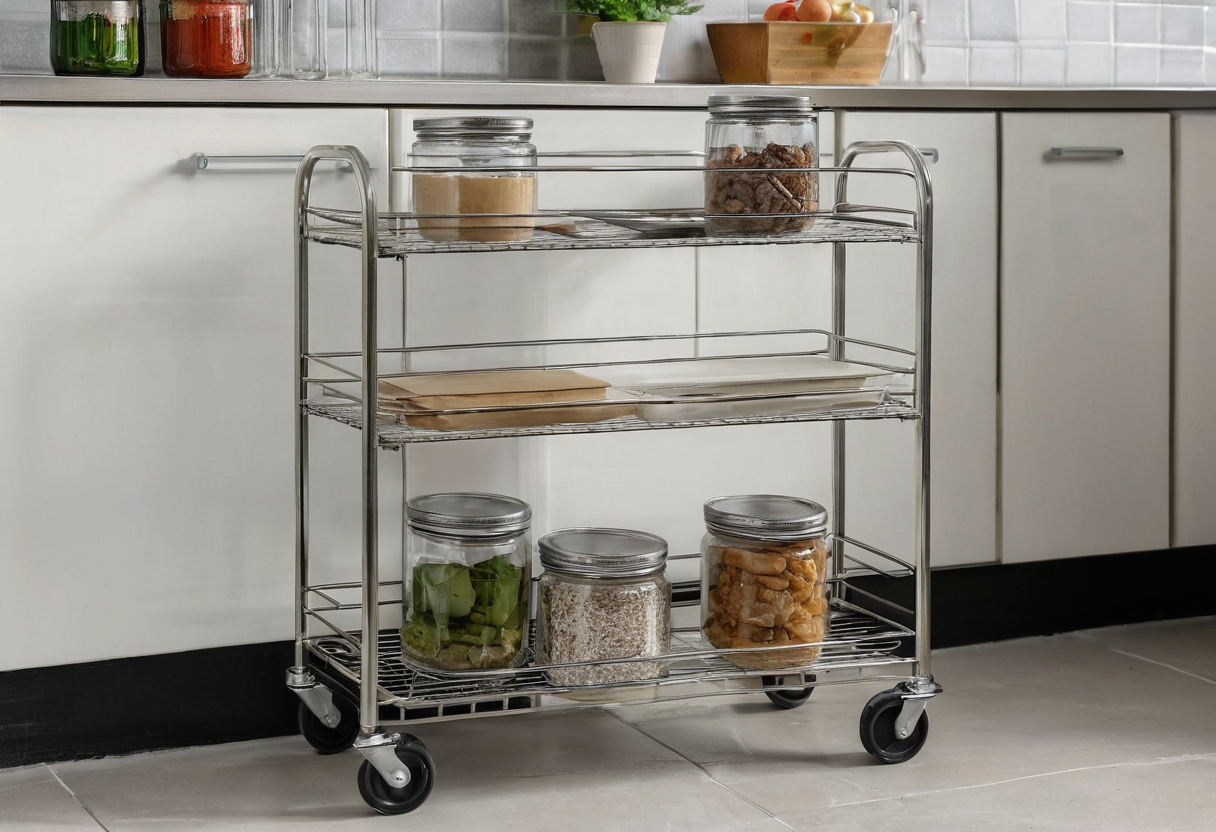
When reviewing a utility cart for kitchen storage, the manufacturer’s listed dimensions provide a starting point rather than a final answer. For example, the RÅSKOG trolley (article 405.821.81) sold by IKEA UAE lists its measurements as length 35 cm, width 45 cm, and height 77 cm. These figures describe the overall outer boundaries of the three-tier wheeled unit itself. Packaging dimensions are listed separately on the product page and should not be confused with the assembled footprint.
This 35×45 cm rectangle represents the overall product plan dimensions. The source does not label this figure as the wheel-contact base or guarantee parking clearance. Comparing these stated overall dimensions against your intended spot is merely a first check; the numbers alone offer no guarantee of a successful fit.
Identifying a Potential Parking Area
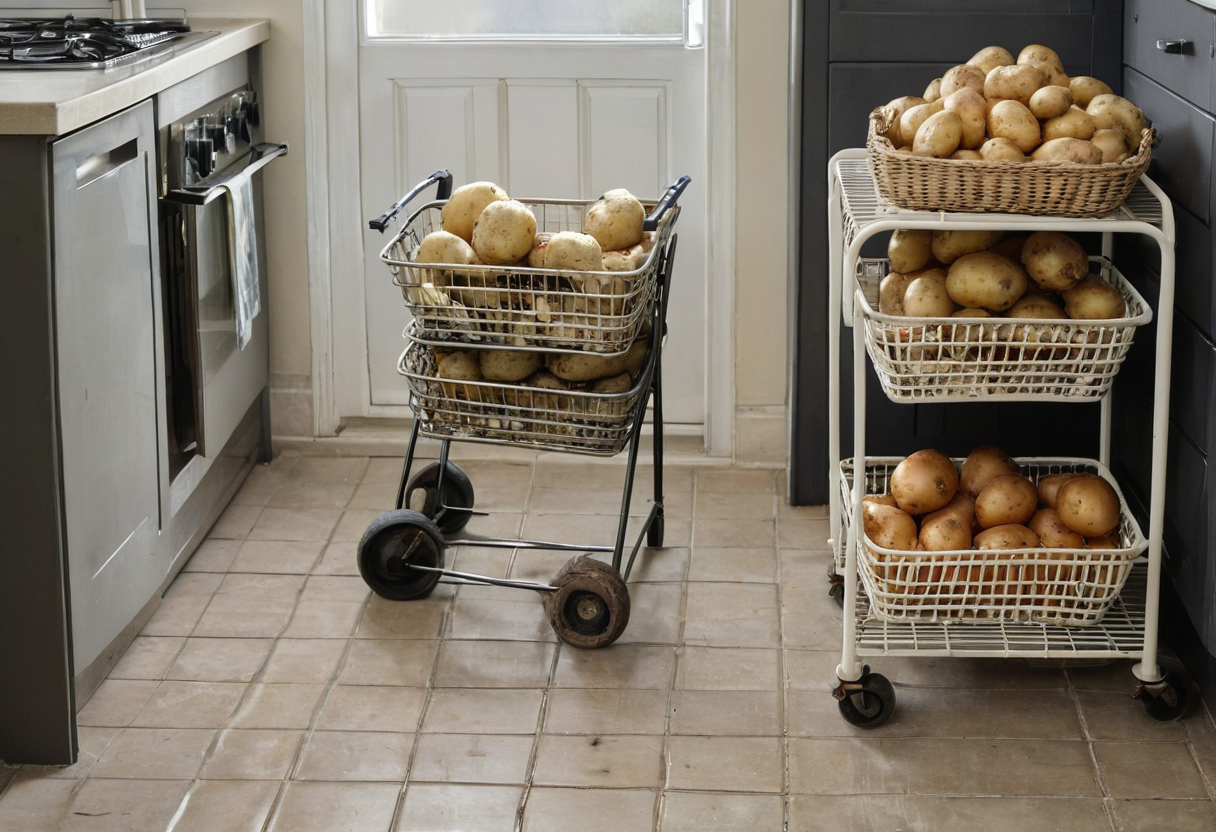
An article on maximising kitchen space published by IKEA suggests parking a trolley in a corner to create extra workspace. The accompanying photograph in that guide illustrates this concept using a BEKVÄM wooden trolley, which is a distinct product from the metal RÅSKOG unit mentioned above. The scene demonstrates a general spatial strategy.
When scouting a potential parking area in your own flat, look for alcoves, gaps between appliances, or unused corners. Consider how the trolley will interact with surrounding items. If you also rely on a small counter footprint solution for daily spices, ensure the parked trolley does not block access to it. Similarly, if you use a designated staging surface near the entrance, the path between that surface and the trolley’s parking spot must remain navigable.
Measuring Your Own Floor Space
Do not rely solely on the trolley’s published dimensions. Measure the floor space of your chosen parking spot independently. Use a tape measure to record the length and width of the available area.
Once you have your floor measurements, compare them to the 35×45 cm overall dimensions of the RÅSKOG trolley as an initial reference.
Observing Door and Drawer Swing
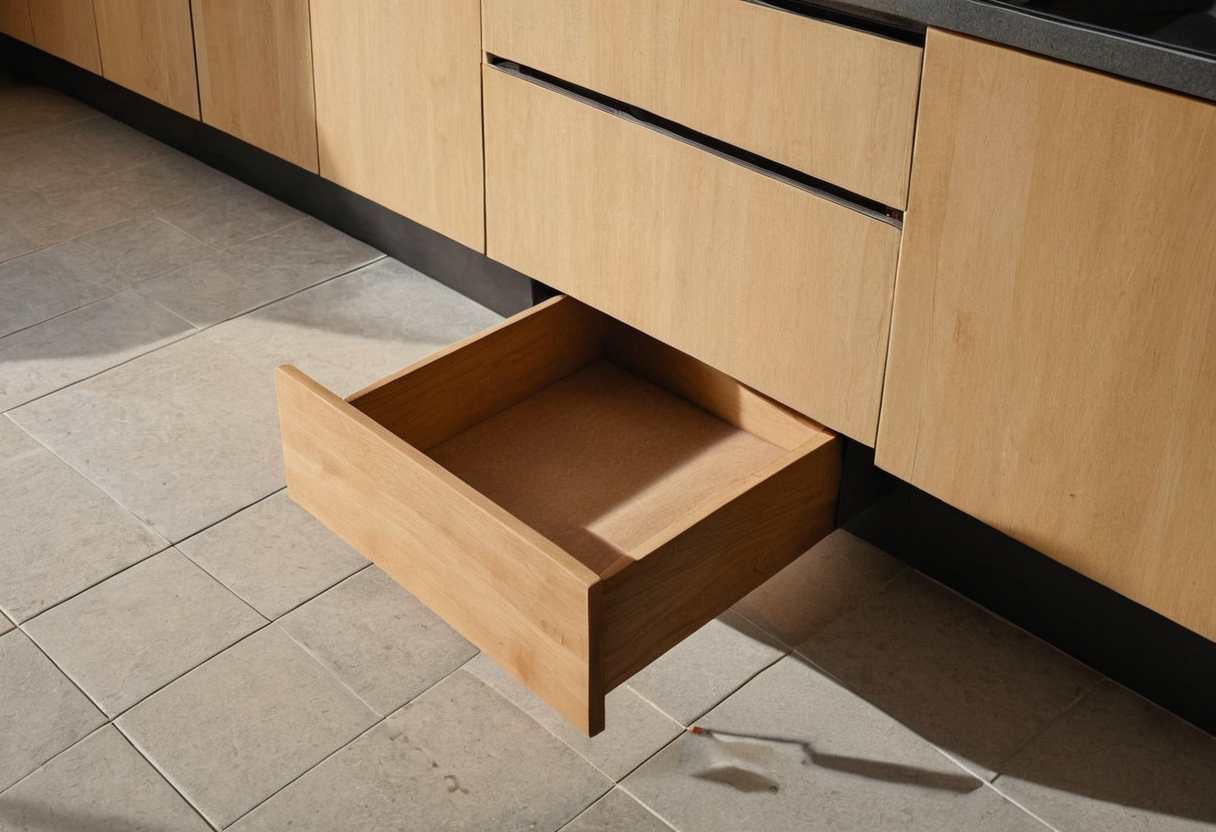
A static dimension comparison ignores movement. Kitchen cabinet doors, appliance doors, and drawers require space that intersects with the floor area. Observing these swings is essential before committing to a parking spot.
- Open each adjacent cabinet door fully and observe the distance it travels across the floor from the hinge point.
- Pull out nearby drawers to their maximum extension and note where the front edge lands relative to your proposed trolley rectangle.
- Check oven and dishwasher doors, which often drop down and extend into the walking space.
- Consider how door movement might be restricted if a tall trolley is parked too close to a cabinet fitted with internal racks.
The stated 35×45 cm overall dimensions of the trolley do not warn you about collisions with moving parts; observing the surrounding furniture can reveal possible conflicts.
Beyond the Numbers
Comparing the stated overall dimensions to your measured floor space and checking door swings are vital planning steps, but they do not cover every variable. The route the trolley must travel from its parking spot to where it is used remains unique to your home. Furthermore, factors such as floor transitions, thresholds, and the presence of other movable objects—like those used for bag organisation—will influence how a wheeled unit operates in practice. The manufacturer's measurements give you the overall geometry of the object; mapping your own space gives you the context required to decide if that geometry works for you.
Cabinets, Trolleys, Drawers and Floors