Why the Manual Drawing Is Only a Starting Point
When organising a refrigerator, many households consult the user manual to understand the available compartments. A typical family manual includes a 'Refrigerator at a glance' drawing with keyed labels pointing to various parts. For instance, the English manual associated with Samsung model RT38CG6020S9 (version 01, dated April 2023) labels items such as the fridge door bin, an optional multi tray, and a vegetable drawer on pages 26 and 27.
However, the same documentation explicitly cautions that the actual image and included parts differ by model and country. Some components shown in the diagram are only fitted to certain models within the family. Therefore, the drawing does not prove the specific configuration of the appliance standing in your kitchen. It serves as a general reference rather than a definitive inventory.
Locating Your Exact Model Code
Before relying on any diagram, locate the exact model code on your appliance. Consult the identification instructions provided with your unit and the relevant Samsung support guidance to find this identifier. Once you have the precise code, search for the corresponding manual from the manufacturer. Using a family-wide document without confirming your model may lead you to plan around shelves or trays that were never installed.
Auditing the Physical Compartments
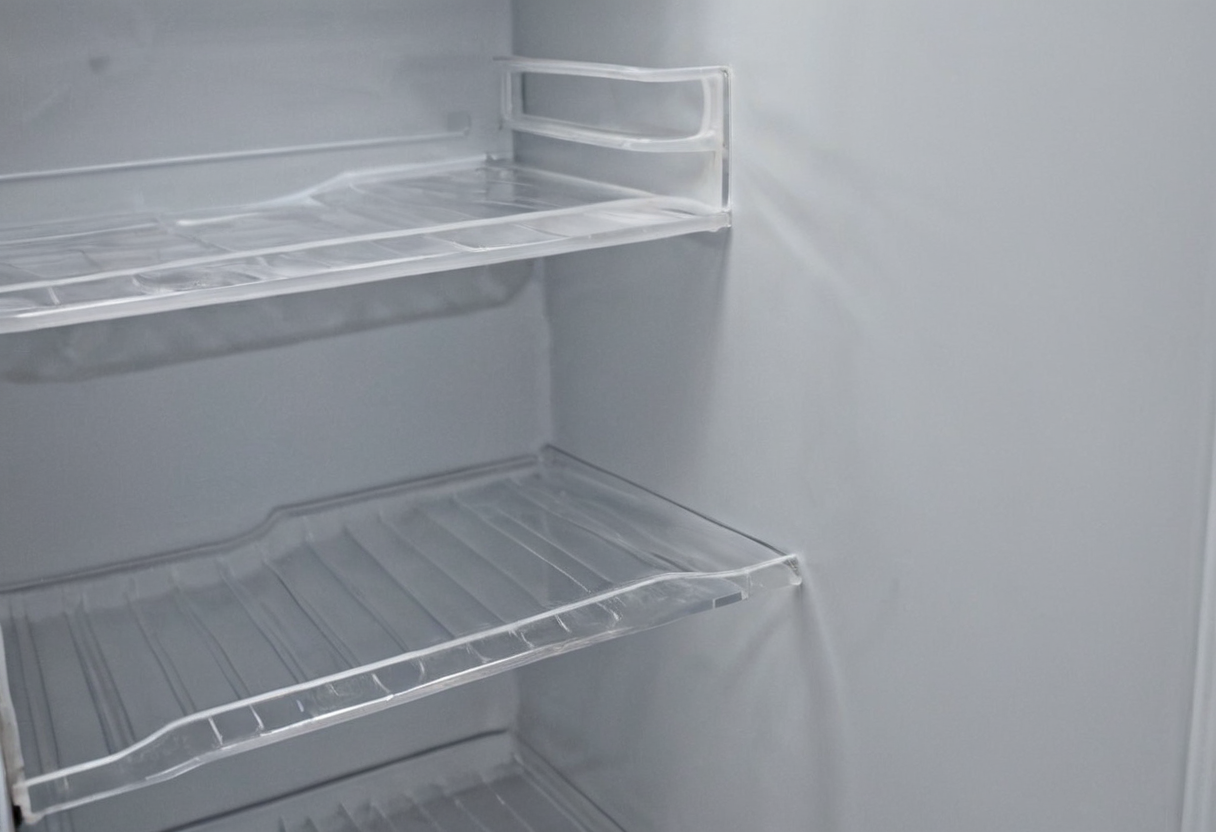
With the correct manual open, compare each keyed label against the interior of your refrigerator. The goal is simply to map the physical space available for organisation by checking which labelled parts are actually installed.
- Open the main door and check whether every labelled shelf position actually contains a shelf.
- Look inside the lower section to confirm the presence and dimensions of any vegetable drawer.
- Examine the door bins to see if they match the number and shape depicted in the diagram.
- Note any parts marked as 'optional' in the manual, such as a multi tray, and verify whether yours is physically present.
If a component appears in the drawing but is absent from your appliance, cross it off your planning list. Conversely, if you find an unlabelled compartment, measure it independently. Understanding these physical boundaries helps when you later consider the fit limits of an under-shelf tray.
Planning Placement Around What Exists
Once you have confirmed which parts are genuinely installed, use that verified layout to decide where items will sit. Knowing the exact footprint of each bin and shelf allows you to evaluate whether container dimensions will fit neatly within the available zones.
This methodical approach also complements broader kitchen routines. A separate grocery unloading surface is another part of the kitchen layout to consider. For dry storage, the documented pantry bin project examines a different set of shelves and containers.
Key Takeaways for Home Organisation
A manufacturer's diagram is a helpful guide, but it must always be checked against the physical appliance. By locating your exact model code, reading the keyed labels carefully, and noting which optional parts are actually fitted, you create a reliable map of your refrigerator's interior. Use only what is physically present when planning your storage layout.
Refrigerator Shelves, Drawers and Fresh Produce